
Ep. 77 | Trauma-Informed EMS: The Shift Changing the Future of the Job
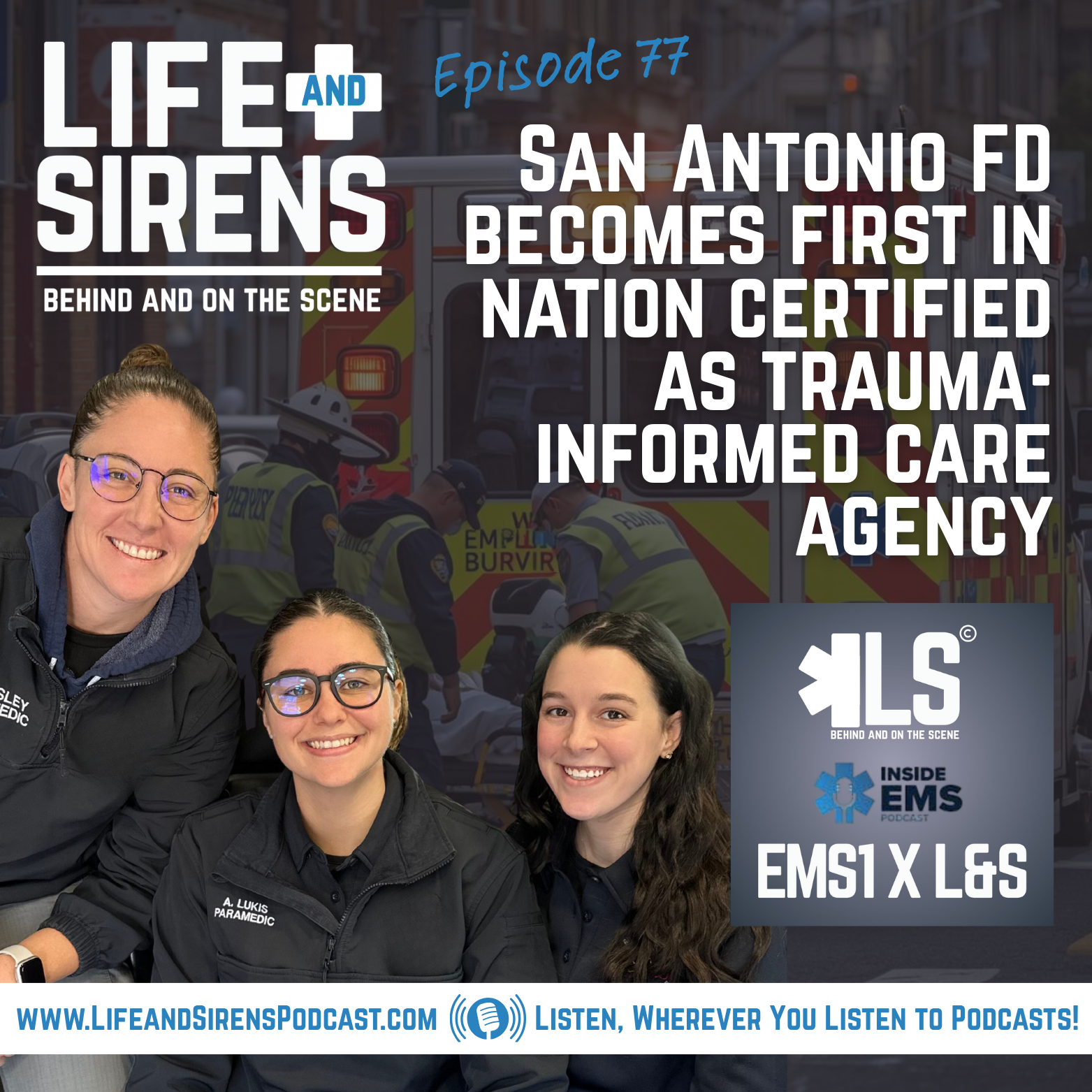
In collaboration with EMS1
A shift is happening in emergency services—one that goes beyond protocols and clinical skills. In this episode, we explore what it means to adopt trauma-informed care at the agency level, following a groundbreaking certification by the San Antonio Fire Department.
This isn’t about a single class or training module. It’s about culture change—how EMS providers understand trauma in patients, in coworkers, and in themselves.
In This Episode
What trauma-informed care actually means in EMS
The San Antonio Fire Department’s certification and why it matters
How trauma shapes patient behavior and communication
The connection between provider burnout and patient care
Real-world scene application of trauma-informed principles
How leadership and policy drive cultural change
Why trauma-informed care may become a future EMS standard
The Story: A First in the Nation
The San Antonio Fire Department recently became the first fire department in the United States to be certified as a trauma-informed care agency.
This wasn’t symbolic—it followed a year-long process evaluating:
Safety
Training
Trust
Collaboration
Organizational culture
The result? A department-wide shift in how providers interact with patients and each other.
What Is Trauma-Informed Care?
At its core, trauma-informed care means recognizing that many behaviors we see are adaptations to past trauma, not simply “difficult” behavior.
Instead of asking:
❌ “Why is this patient being difficult?”
We ask:
✅ “What might have happened to this patient?”
This shift changes:
Communication style
Body language
Scene approach
Clinical decision-making
Why This Matters in EMS
EMS culture has historically valued toughness and resilience—but sometimes at the cost of:
Emotional suppression
Burnout
Reduced empathy
Trauma-informed systems aim to create:
Psychological safety
Better communication
Improved patient outcomes
Because how we show up on scene directly impacts care.
Real-World Application
Imagine a domestic disturbance call:
Patient is yelling, refusing care, and distrustful.
Traditional mindset:
👉 “This patient is uncooperative.”
Trauma-informed mindset:
👉 “This patient may have a history of abuse or mistrust.”
That shift can:
De-escalate the scene
Improve patient cooperation
Reduce risk for everyone involved
Provider Trauma Is Part of the Equation
Trauma-informed care isn’t just about patients—it’s about providers.
EMS clinicians face:
Repeated exposure to trauma
Sleep deprivation
Violence
Moral injury
Without support, this leads to:
Burnout
Compassion fatigue
Decreased performance
Trauma-informed agencies recognize that healthy providers deliver better care.
System-Level Change
This isn’t just a mindset—it requires leadership and policy.
Examples of trauma-informed systems include:
Peer support programs
De-escalation training
Psychological safety reporting
Leadership communication training
Wellness-focused scheduling
Post-critical incident support
This is culture engineering, not just education.
The Future of EMS
Trauma-informed care may become a benchmark in EMS—alongside:
Clinical accreditation
Response standards
Quality metrics
Agencies that invest in:
Provider wellbeing
Patient-centered communication
…will likely see:
Better retention
Improved outcomes
Increased public trust
Reflection Questions
Take a moment and ask yourself:
How does your agency respond to provider trauma?
Do you feel psychologically safe speaking up?
Are difficult patients labeled… or understood?
What policy would you change tomorrow?
Key Takeaway
Clinical excellence and human understanding are not competing priorities.
They are the same mission.
Special Collaboration
This episode was created in collaboration with EMS1, a leading voice in EMS education and news.
To read the EMS1 article that inspired this episode of Life and Sirens, click here: EMS1.com
